
Bel was just eight years old when she fell from a climbing frame and sustained a spinal cord injury that left her paralysed from the top of her shoulders down.
It was the sort of tumble that children pick themselves up from every single day. But for Bel, it had devastating consequences. She told us: “I was playing in a neighbour’s garden; I lost hold of the climbing frame and fell. I couldn’t breathe and had to be given mouth-to-mouth until the ambulance arrived. I was rushed to hospital where the doctors found I had broken my neck.”
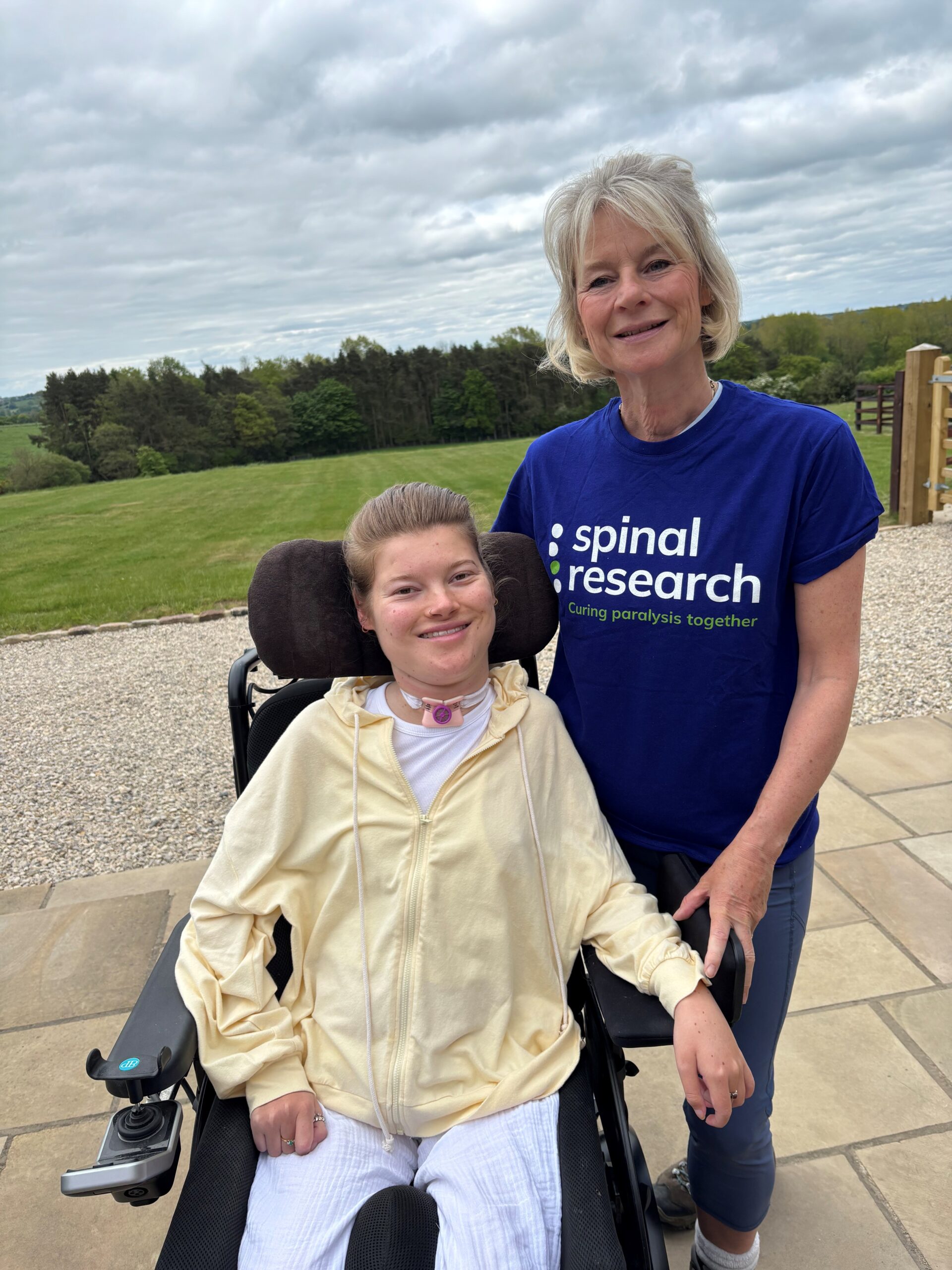
"If I had more control of my arms, I would be so much more independent. Little things like brushing my hair, putting my make-up on, writing at school – all those things that I can’t do now but if I had the movement in my arms then I’d be way more independent."
Bel’s injury has also affected her ability to control her diaphragm, so whilst she has learnt to breathe via her tracheotomy, using her shoulder muscles to raise and lower her diaphragm when in her wheelchair, she is dependent on a ventilator at night to make sure she keeps breathing.
Despite everything she faced, Bel’s story didn’t stop there. She returned to school, completed her GCSEs and A-levels, and later graduated with a degree in psychology. After university, Bel did a few months work experience at Spinal Research. Today, she works at Spinal Research as part of the Audience and Community team, where she looks after all of the charity’s incredible community fundraisers. She said “I love my job, as everyday I get to speak to other members of the spinal cord injury community, who understand first-hand the difficulties and challenges of living with paralysis. I’m inspired by the stories I hear, and what people do to raise money and awareness for this amazing charity.”
Discover more
Community stories
Read more stories of people with a spinal cord injury and the hope they have that, one day, research will help them. Read more
Our Research
Research facilities around the world are developing a range of cutting-edge treatment pathways, some now in clinical trial. Read more